How to Tell if Nephrite Is Real: What Actually Confirms Genuine Nephrite Jade
Nephrite is one of the two minerals sold as jade, and many green, white and black stones are passed off under that name. Telling genuine nephrite from a look-alike is harder than many sellers suggest. Imitations can match its colour, its waxy shine and even its weight in the hand. This guide explains what nephrite is at the mineral level and why quick tricks at home tend to mislead. It covers the laboratory methods and certification schemes that can settle the question, and how to prepare a piece so an expert can assess it efficiently. It also covers origin claims, because a stone can be real nephrite and still not come from the place it is sold as.
Quick answer: You cannot reliably confirm nephrite at home. Genuine nephrite is confirmed by laboratory analysis such as Raman spectroscopy, or for New Zealand pounamu by an authenticity certification scheme. Send doubtful or valuable pieces to a qualified gemmologist.
What nephrite is, in mineral terms
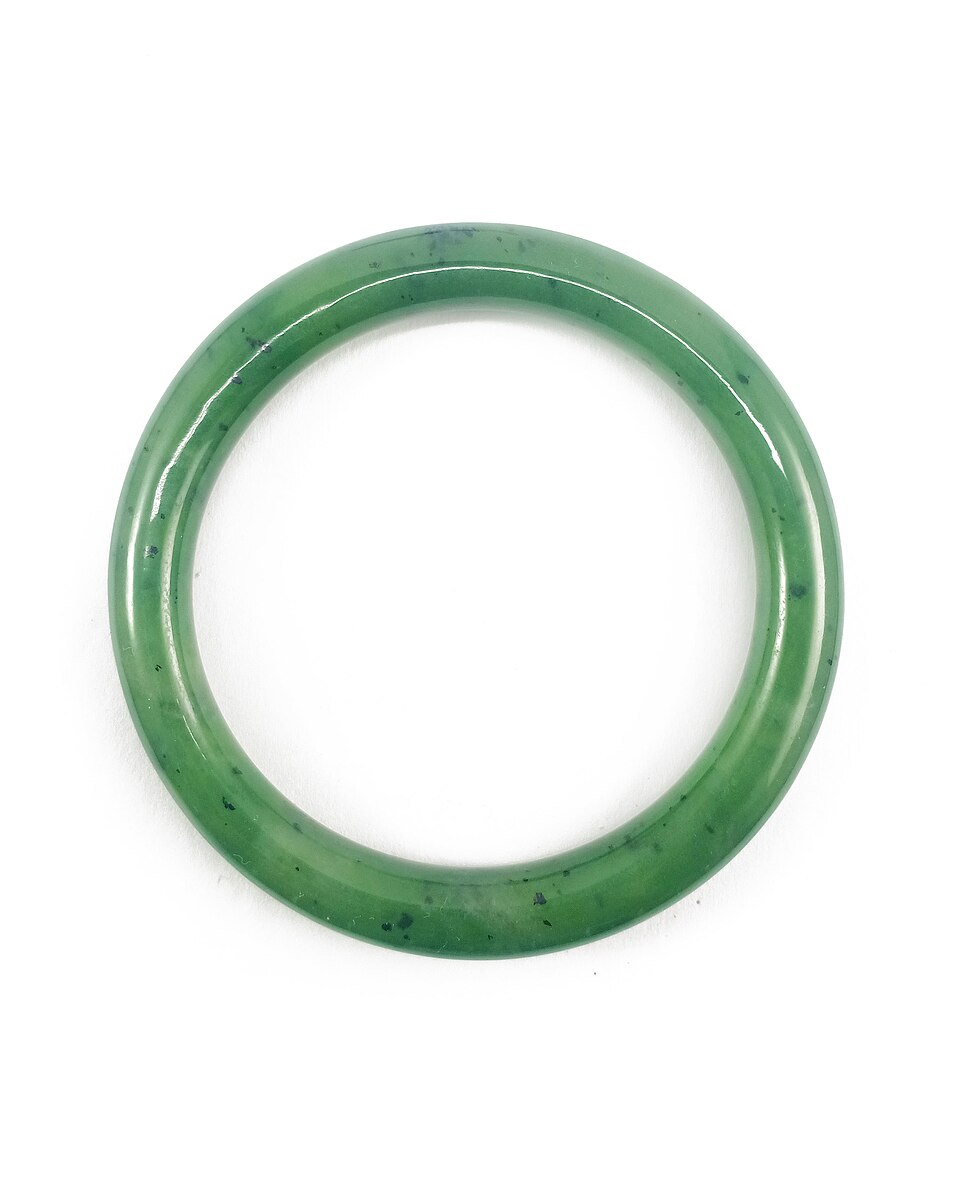
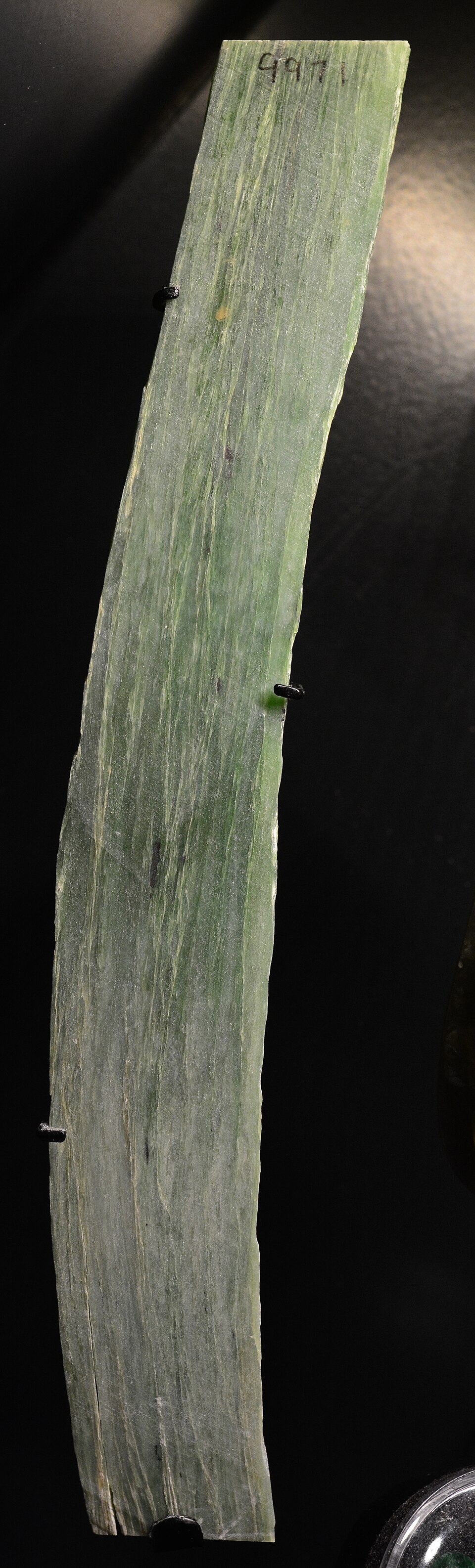
Nephrite is not a single crystal like a sapphire or a garnet. It is a compact mass of tiny, fibrous amphibole crystals that interlock and felt together. That felted structure makes carved nephrite tough. Thin blades, chains and pierced pendants survive in it where a more brittle stone would snap. The same structure explains its oily or waxy lustre, which looks quite different from the bright surface flash of a faceted gem.
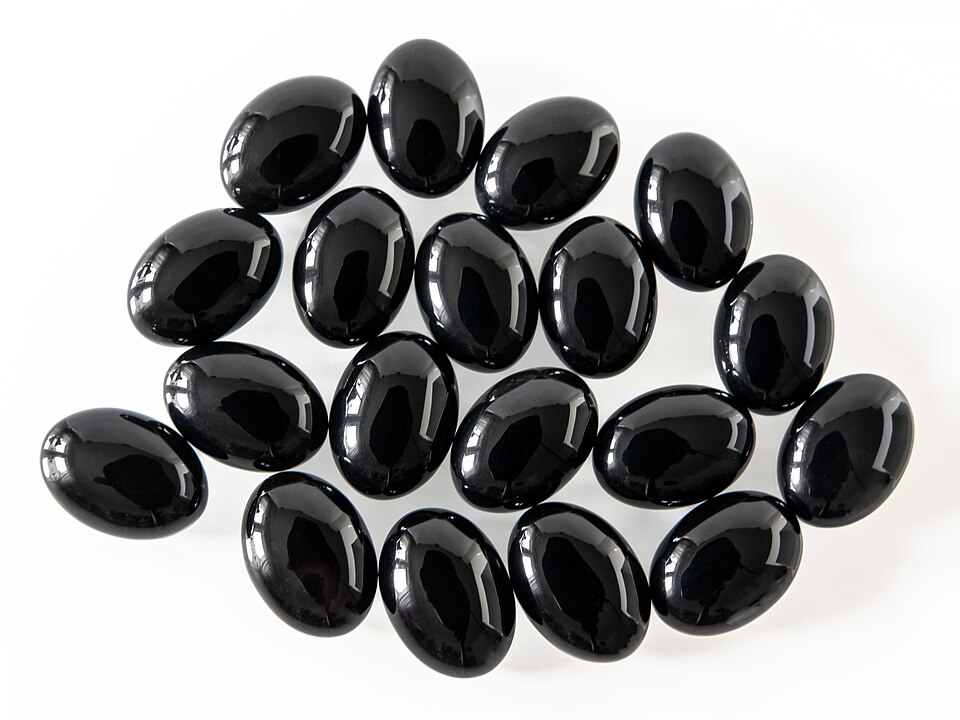
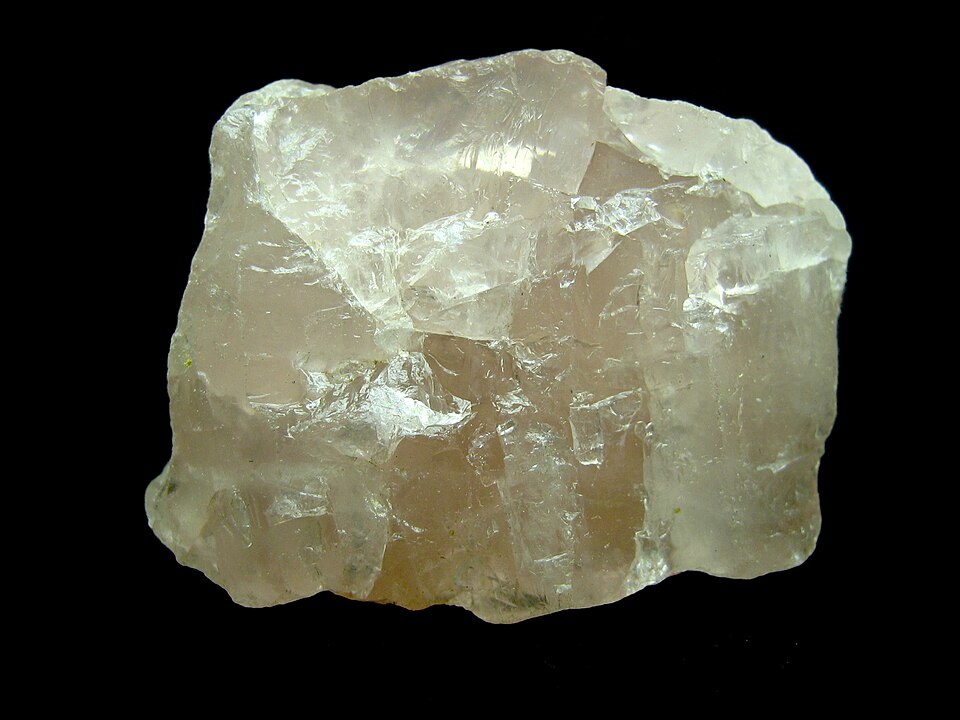
The amphibole belongs to the tremolite-actinolite series, and its general chemistry is written as Ca2(Mg, Fe)5Si8O22(OH)2 [1]. The part in brackets matters for identification. Magnesium and iron share the same position in the structure. A stone rich in magnesium tends to be pale, while one carrying more iron shows deeper greens. Creamy white pieces, spinach greens and near-black stones can all be the same material, so colour alone settles nothing.
The naming history is worth knowing before you read a label or a lab report. Nephrite stopped being treated as a separate mineral species in 1978 (replaced by tremolite) [1]. Today nephrite is a trade and gemmological term for the compact, jade-quality form of tremolite or actinolite. A lab report that names tremolite or actinolite and describes a fibrous aggregate does not contradict a nephrite sales label. It is the mineralogical way of saying the same thing.
Jade is an umbrella word covering two different materials. Nephrite is an amphibole, while jadeite is a pyroxene with a different chemistry and structure. Both are genuine jade, but they are not interchangeable. A seller who calls a piece jade without saying which one has not yet told you what you are buying.
Why 'real nephrite' can mean several different things
When people ask whether their nephrite is real, they are usually asking one of four separate questions. Each needs a different kind of answer.
- Is the material nephrite at all, or a different stone sold as jade?
- If it is nephrite, has it been dyed, coated, filled or otherwise treated?
- Does it come from the source the seller claims, such as New Zealand or Wyoming?
- If it is described as antique or archaeological, is the age claim credible?
The first question is usually the starting point. Green and white stones that turn up under jade names include:
- serpentine
- aventurine quartz
- dyed quartzite
- chalcedony such as chrysoprase
- prehnite
- glass and resin
Some of these are attractive and honestly sold under their own names. The problem arises only when they are labelled nephrite or jade. Jadeite can also be confused with nephrite. Both are jade, but they are not valued the same way, so the distinction still matters.
Treatment is a separate issue. A piece can be real nephrite and still have had its colour altered, or its surface coated to hide wear or improve its look.
Origin is separate again. A stone can be genuine nephrite without being the regional material it is marketed as. That matters because some sources carry cultural significance or collector demand that others lack.
Age claims are harder still. A carving made of real nephrite may be recent work styled to look old. Showing that a piece is genuinely ancient goes beyond identifying the mineral. It usually involves specialists in that culture's objects as well as a gem lab.
Keep these four questions apart when you seek help. A document that answers one of them does not automatically answer the others.
Why home tricks will not settle it
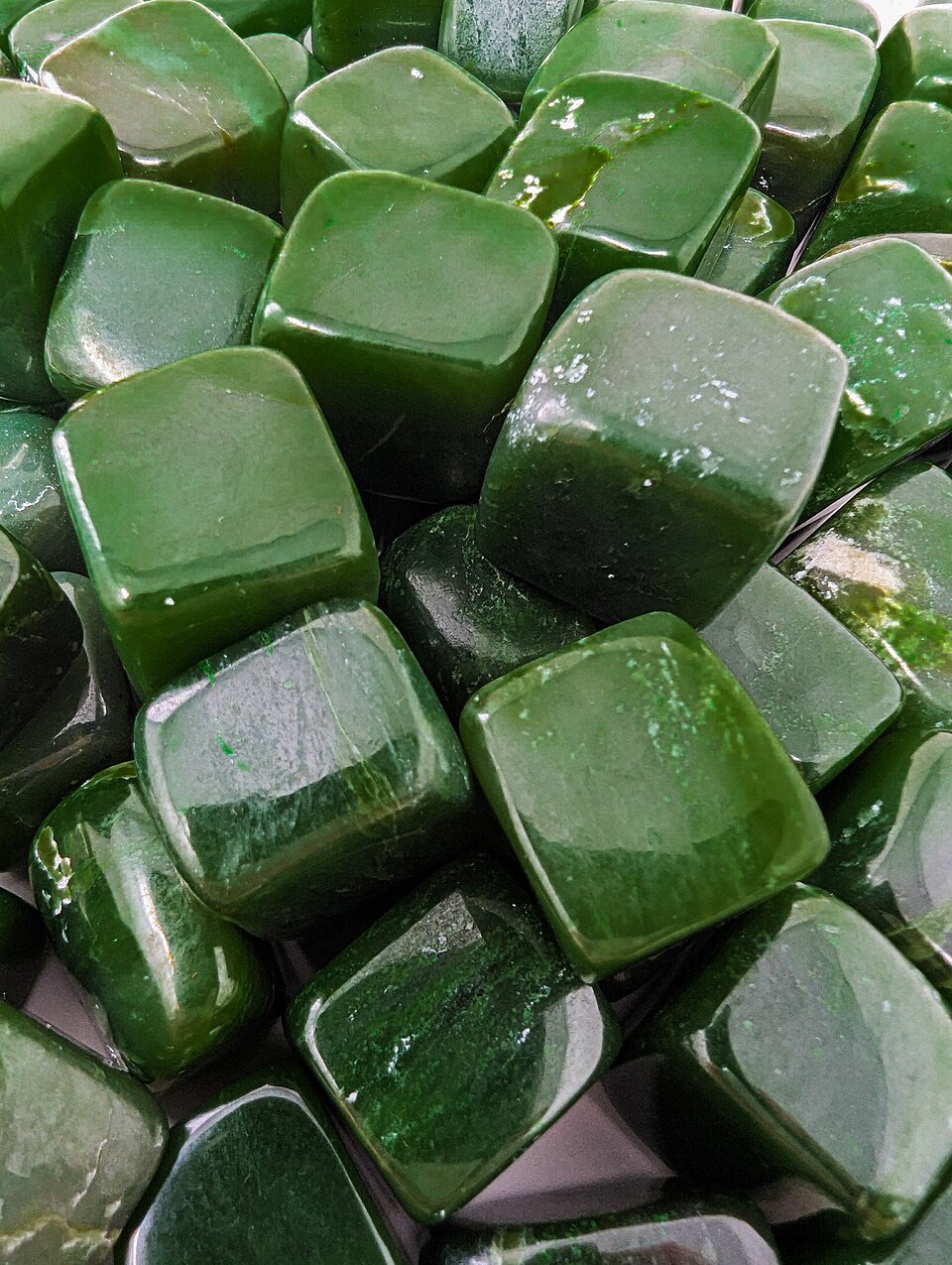
Online advice about jade is full of quick tricks, and many of them fail with nephrite for a simple reason. The look-alikes overlap with it on the very properties those tricks rely on. Colour, translucency, lustre, heft and surface feel vary widely within genuine nephrite, and several imitations share them. A trick that seems to pass a piece often only shows that it is not plastic.
Warning: Do not scratch a piece with a knife, a needle or another stone, and do not apply heat or a flame. These can leave permanent marks, burn off surface wax, or crack a carving along an existing weakness. Treated or coated stones are especially vulnerable, and damage to a carved or old piece cannot be undone. Harsh chemical cleaners carry similar risks and can strip away surface evidence that a specialist would want to see. None of these actions produces an identification you could rely on when buying, selling or insuring.
A careful look can tell you whether a piece is worth sending for testing, but not whether it is nephrite. If a piece cost little and you simply like it, that may be enough. If you are paying a significant sum, selling, insuring, or relying on an origin or age claim, ask an expert.
Laboratory methods that confirm nephrite
Real confirmation comes from instruments that read the material's structure or chemistry directly. Two analytical approaches appear in published research on nephrite.
Raman spectroscopy shines a laser on the stone and records how the light scatters back. Each mineral gives a characteristic pattern. That pattern lets a laboratory tell an amphibole such as nephrite apart from serpentine, quartz-based imitations, jadeite or glass. Researchers have also published work on the characterization of Mg and Fe contents in nephrite using Raman spectroscopy [1]. This connects directly to the magnesium-iron balance in the formula described earlier. Raman is generally non-destructive and suits finished jewellery and carvings, so it is a sensible method to ask a gemmological laboratory about.
Micro-PIXE is a particle-beam technique that measures trace elements in a very small spot. It has been applied in Micro-PIXE geochemical fingerprinting of nephrite Neolithic artifacts [1], comparing the chemical signature of ancient objects with known sources. This is research-level work done at specialist facilities, not a routine retail service. It is relevant when provenance genuinely matters, as with museum objects or significant archaeological finds.
For material sold as New Zealand stone, there is also a cultural route. Ngāi Tahu runs a pounamu certification scheme to verify the authenticity of New Zealand stone [1]. This answers the origin question for pounamu, which a mineral identification cannot do on its own.
| Route | Main question it answers | Who carries it out | Typical use |
|---|---|---|---|
| Raman spectroscopy | Is it nephrite, and what is its Mg-Fe character? | Gemmological or mineralogical laboratory | Jewellery, carvings, rough stone |
| Micro-PIXE fingerprinting | What is its trace-element signature and likely source? | Specialist research facility | Archaeological and museum objects |
| Ngāi Tahu pounamu certification | Is it authentic New Zealand stone? | The Ngāi Tahu scheme | Pounamu sold as New Zealand material |
No single route answers every question. A Raman result can confirm the mineral without saying where it was mined. An origin certificate, in turn, is tied to one specific source.
Origin claims: pounamu and Wyoming nephrite
Two regional names come up often with nephrite, and both deserve care.
In New Zealand, nephrite forms part of the material known as pounamu, which holds deep cultural significance for Māori. That significance makes it worth confirming that a carving sold as New Zealand pounamu really is local stone. The Ngāi Tahu certification scheme described above exists for this situation [1]. If a seller claims New Zealand origin, ask whether the piece carries that authentication. If it does not, treat origin as an open question rather than as proof either way.
Wyoming is the other name to recognise. Nephrite is the official state mineral of Wyoming [1], and the Wyoming State Geological Survey describes it as "our state gemstone, nephrite jade" [2]. Wyoming material has a long collecting history, and pieces labelled Wyoming jade attract collectors of American stones. A regional label should therefore be backed by more than the label itself. Useful support includes a documented collecting or purchase history, a reputable dealer, or a laboratory opinion where one is available.
Real nephrite and real New Zealand or Wyoming nephrite are different claims. Confirm the mineral first, then ask what evidence supports the origin. Where nothing in writing addresses origin, treat the source as unconfirmed.
Preparing a piece for an expert
A little preparation helps the expert, and it helps you judge whether testing is worth it.
- Write down what the seller told you, word for word, such as jade, nephrite, pounamu, Wyoming jade, antique, natural or untreated.
- Keep receipts, auction listings, earlier valuations and any certificates together.
- Note any family history, such as when and where a piece was bought.
- Photograph the piece in daylight from several angles, including any stamps on metal fittings.
- Leave the piece as it is, with no polishing, waxing or scrubbing before it is seen.
When you contact a laboratory, explain which of the four questions above you are trying to answer, and ask which of them its work will cover. Do not assume a report addresses anything it does not mention in writing.
Ask the lab three things:
- Whether it uses Raman spectroscopy [1].
- Whether the report will name the material as nephrite, tremolite or actinolite.
- How the piece should be packed, delivered and returned, and who is responsible for it while it is out of your hands.
For pounamu, ask the seller about Ngāi Tahu certification [1] before you buy rather than after.
Tip: Before you pay for a piece described as nephrite, ask the seller to put that description, together with any origin or age claim, on the receipt or invoice. If analysis later shows the stone is something else, the written description gives you a clear basis for discussing a return or refund.
If the nephrite is set in gold, silver or platinum, do not try to remove it yourself. Prying a stone out can damage the stone, the prongs or the bezel, and a carved piece may crack along a hidden weakness. Describe the setting when you first get in touch and leave any decision about removal to the professional handling it.
If the piece is a carving rather than jewellery, mention its size and weight when you first get in touch, so the lab can say how it should be delivered and handled.
Checking other stones in the same collection
Nephrite often arrives in an estate lot or mixed collection, alongside rings, brooches and loose stones that raise their own questions. The same approach works across all of them:
- Identify the material with appropriate testing.
- Keep treatment and origin as separate questions.
- Avoid anything that could damage the piece.
If a green stone in the box turns out not to be nephrite, it may still be worth investigating. Our guide on how to tell if a demantoid is real covers a vivid green garnet seen in some antique jewellery. How to tell if a garnet is real explains the wider garnet family. For yellow-green or golden stones, see how to tell if a chrysoberyl is real. If the nephrite is paired with a clear accent stone, how to tell if a diamond is real explains why that stone needs proper testing too.
Working through a collection one question at a time has two benefits. You avoid paying for tests you do not need, and you avoid assuming a whole lot is genuine because one piece checks out.
Where Jewelry Identifier fits
Before you pay for laboratory work, it helps to know roughly what you have and to keep a record of it. Jewelry Identifier can:
- suggest from a photo what a stone and its metal are likely to be
- give a fast AI value estimate for research
- point to the era or style of a piece
- save everything to a personal catalog with notes, tags and photos
That makes it a practical way to sort a collection and decide which pieces deserve an expert's time. It does not replace laboratory confirmation. A photo cannot prove a stone is nephrite, reveal treatment or verify origin, and an AI estimate is not a certified or insurance appraisal. For those answers, use the laboratory methods, certification schemes and specialists described above.
Common questions
- Is nephrite the same as jade?
- Nephrite is one of the two materials that can properly be called jade, and the other is jadeite. They are different minerals with different structures. A piece labelled only as jade could be either one, or an imitation.
- Can I tell nephrite from serpentine just by looking?
- Not reliably. Serpentine can share nephrite's green colours and waxy shine, and both vary a great deal in appearance. A confident answer needs laboratory testing arranged through a gemmologist.
- Does a lab result showing my stone is nephrite prove where it came from?
- No. A Raman result can show that the material is nephrite without saying where it was mined. A claim such as New Zealand pounamu needs its own authentication from the body that certifies that source.
- Is white or black nephrite less likely to be genuine than green nephrite?
- No. Nephrite occurs in pale, green and very dark forms because its iron and magnesium content varies. Colour by itself neither confirms nor rules out a genuine stone.
- Should I take a nephrite stone out of its setting before testing?
- No, do not try to remove it yourself. Prying a stone from its mount can damage both the stone and the metal, so describe the setting when you contact a gemmologist and leave any decision about removal to them.