How to Tell If Rose Quartz Is Real: Practical Checks for Pink Quartz
Rose quartz appears in bead strands, carved hearts, cabochon rings and polished spheres, and pink glass or resin is often sold beside it under a similar name. This guide covers the checks that reference sources describe for this pink stone. It explains what each check can and cannot prove, and it shows where a home check ends and a gemologist's work begins. Read it before you buy, sell, list or insure a pink stone that someone has called quartz, so you know which observations count and which ones mislead.
Quick answer: Real rose quartz is a pink, translucent stone with a glassy luster, conchoidal fracture and a hardness of 7 on the Mohs scale, and its streak is colorless. Imitations can copy the color, so have a gemologist confirm a valuable piece.
What real rose quartz is made of
Rose quartz is a pink variety of quartz, so it shares the chemistry and structure of the rest of that mineral family. Its formula is SiO 2 [1], the same silicon dioxide found in clear rock crystal, amethyst and citrine. Its crystal system is Trigonal [1]. That detail matters later in this guide, because the orientation of the crystal decides whether a cut stone can show a star.
Hardness does most of the practical work. The material sits at 7 on the Mohs scale [1], so a genuine piece resists everyday scuffs much better than glass or resin of a similar color. A hardness of 7 on the Mohs scale [1] also makes the stone suitable for beads and pendants. It can still chip if it takes a sharp knock against something harder.
You cannot see chemistry or crystal structure with the naked eye. These facts explain why the visible checks below work. The pink color, the glassy shine, the way the stone breaks and the way it handles light all follow from what the material is. If you have read our guide on how to tell if a citrine is real, much of the reasoning will feel familiar, because citrine belongs to the same family and shares the same basic structure.
Start with what you can see: color, luster and translucence
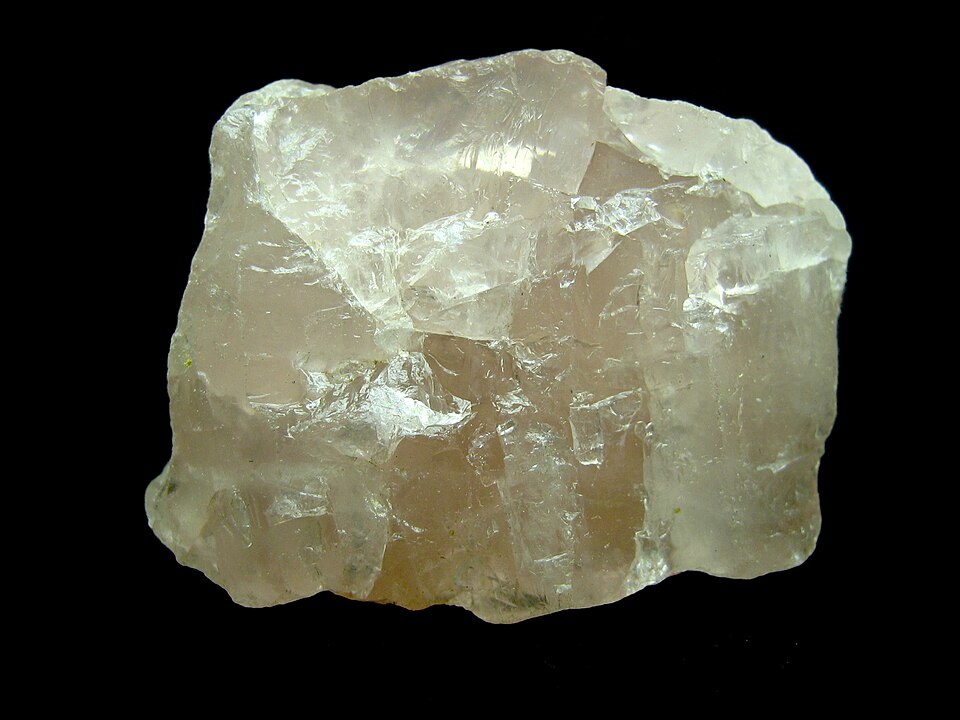
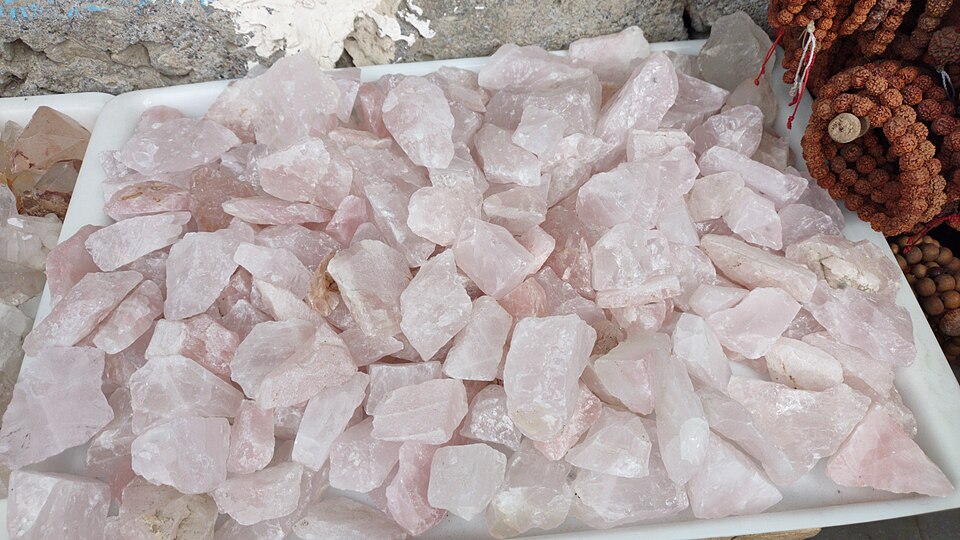
Reference descriptions list a set of identifying traits together: conchoidal fracture, glassy luster, hardness, pink color, translucence [1]. You can judge three of them in good light without tools, so start there.
- Color: look for a pink body color. It can range from a pale blush to a deeper rose. It should read as pink, not orange, purple or red.
- Luster: tilt the stone under a window or lamp. A polished surface should give a glassy reflection, like a window pane. A waxy or plasticky sheen does not fit.
- Translucence: hold the stone between your eye and the light. Light should pass through it, but you should not see a crisp image of anything behind it.
The last point surprises many buyers, because cloudiness is part of what defines this gem. Tiny internal inclusions cause it. These inclusions are usually abundant enough to make the rose quartz translucent instead of transparent [1]. A soft, milky glow is what you should expect. It is not a defect.
This cuts both ways. A perfectly water-clear pink stone is not automatically fake, but it does not match the typical description, so it deserves a closer look and a second opinion. A fully opaque stone that lets no light through, such as a painted or coated bead, does not match either.
Tip: judge the pink color against a plain white sheet of paper in daylight from a window [1]. Warm indoor bulbs can change how pink a stone looks, and a white background makes the body color, the glassy luster and the level of translucence easier to compare.
Fracture, chips and hardness
Conchoidal fracture is the curved, shell-like break you see on the chipped edge of a bottle: a smooth, rippled surface rather than a flat, stepped one. Quartz breaks this way, and the fracture is one of its listed identifying traits [1]. You usually won't see it on a well-polished stone. Where an older bead, a drill hole or the edge of a worn cabochon already carries a small chip, though, the shape of that break becomes part of the evidence. A curved, glossy chip surface is consistent with quartz [1].
Don't read too much into this. Glass also breaks with a curved, shell-like surface, so conchoidal fracture supports quartz but does not rule out glass. It only becomes meaningful alongside the other traits.
Hardness separates the genuine stone from many softer imitations. At 7 on the Mohs scale [1], it is harder than most materials it meets in daily wear. The safest way to use hardness at home is to observe it, not test it. Look at a piece that has been worn for a while. Facet edges and polished domes on genuine material tend to stay crisp, while a softer substitute often shows rounded edges and a haze of fine scratches [1]. Treat this as a hint, not proof, because a new or rarely worn imitation will still look sharp.
Warning: do not try to prove hardness by scratching a finished piece against glass, a steel file or another stone. A scratch test leaves permanent marks and can chip a bead or cabochon. A polished jewelry stone loses value once its surface is damaged. If hardness needs confirming on a piece that matters to you, leave it to a gemologist.
The streak check, and when to skip it
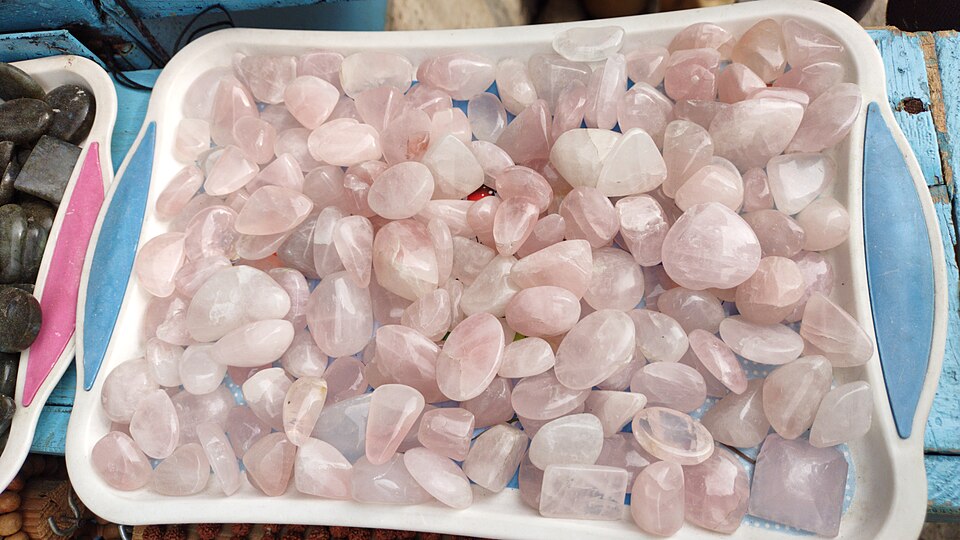
Streak is the color of a mineral's powder. It is traditionally seen by rubbing a specimen across an unglazed porcelain streak plate. For rose quartz, the recorded streak is colorless (harder than the streak plate) [1]. The stone is harder than the porcelain, so it does not leave a colored line of powder. It leaves nothing, or it scratches the plate.
The result is mainly useful for rough specimens and tumbled pieces you don't mind marking. A distinctly pink or colored powder line would point away from this identification, because the expected streak is colorless [1]. A colorless result does not confirm the stone on its own, though. It is one more observation to weigh alongside color, luster and translucence.
Skip it for set jewelry and polished cabochons. Dragging a finished stone across a hard ceramic surface can dull the polish, scratch the surface or chip an edge. Treat streak as a collector's check on rough material, not something to try on a ring at a market stall.
Optical clues: stars and dichroism in cut rose quartz
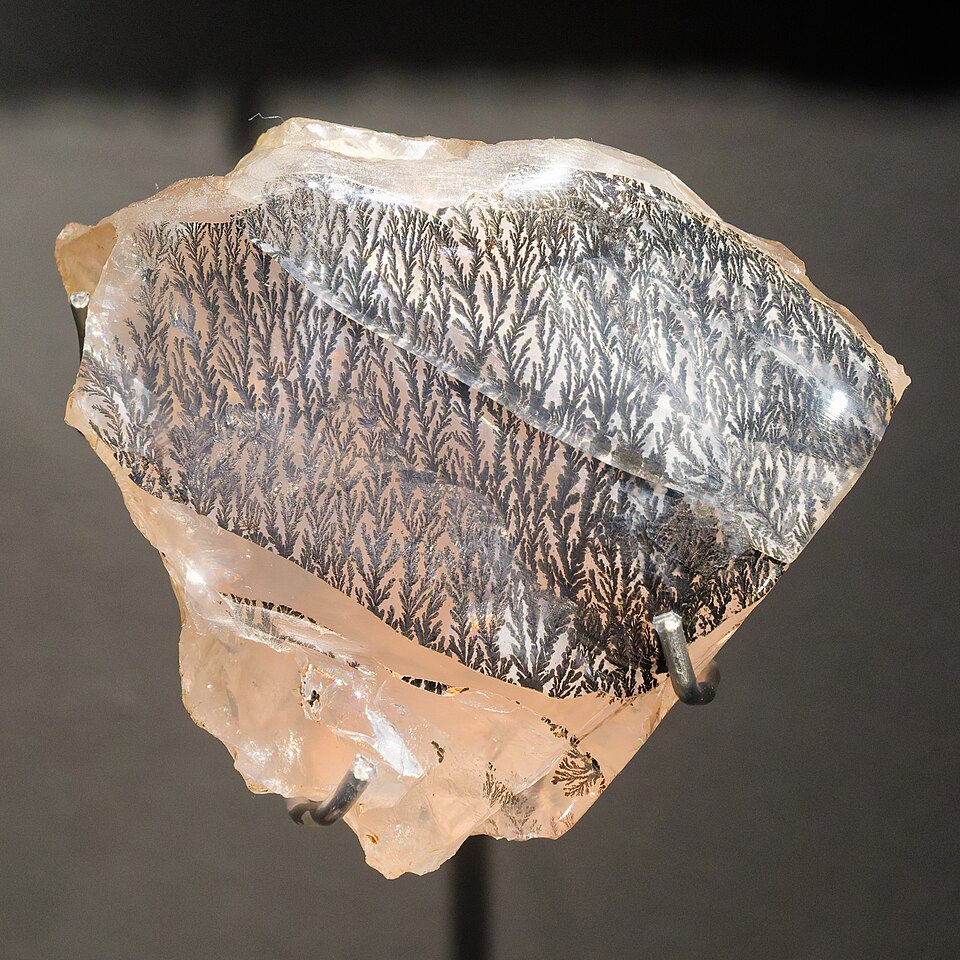
Some cut material shows a star. If a cabochon is cut so that its base is perpendicular to the c-axis of the quartz crystal, the cabochon might display asterism in the form of a six-ray star [1]. The c-axis is the main axis of the Trigonal [1] crystal. Whether a star appears therefore depends on how the cutter oriented the rough, not only on the material.
To look for one, use a single point of light, such as a phone flashlight or a bare bulb, above a domed cabochon or a sphere [1]. Rotate and tilt the stone slowly and watch for rays crossing the dome. If you find a star, count the rays. The described effect is a six-ray star [1].
A second source adds two related points: rose quartz is dichroic and may display asterism when cut into spheres or cabochons [2]. Dichroic means the stone can show two slightly different shades when you view it from different directions. In pale pink material the difference is subtle and hard to judge by eye, so gemologists check dichroism with a dichroscope rather than by eye [2].
Keep the logic straight. A star is a supporting clue, not a requirement. Most pieces never show one, so a missing star tells you nothing about authenticity. A star with a different number of rays doesn't fit the description, and the stone should go to a gemologist.
Putting the rose quartz checks together
No single trait settles the question. A stone becomes convincing when several observations agree. Picture a pink stone with a glassy luster and a soft translucence that has kept crisp edges through years of wear. That is consistent with material at 7 on the Mohs scale [1]. A pink stone that looks waxy, is completely clear or opaque, and shows worn, rounded edges after light use does not fit the profile.
The table below gathers the traits from this guide and shows which ones you can realistically check at home.
| Property | What genuine material shows | Home check? |
|---|---|---|
| Color | Pink [1] | Yes, in daylight |
| Luster | Glassy [1] | Yes |
| Transparency | Translucent, not transparent [1] | Yes |
| Fracture | Conchoidal [1] | Only where chipped |
| Hardness | 7 on the Mohs scale [1] | Not without risk of damage |
| Streak | Colorless (harder than the streak plate) [1] | Rough material only |
| Crystal system | Trigonal [1] | No, needs a lab |
| Optical effects | Possible six-ray star [1]; dichroic [2] | Star yes; dichroism needs a dichroscope |
Here is how to read the results. If every home check fits, the stone is consistent with genuine material, but you have not proved it. If one trait is off, such as unusual clarity, get a second opinion before you pay for, sell or insure the piece. If several traits are off, the stone is probably a different material or an imitation. In that case, have it identified rather than guessing.
Common mistakes that lead to the wrong answer
Most wrong calls come from a few habits.
- Treating cloudiness as a fault. Soft translucence is the normal state of this gem [1]. Buyers sometimes pass over genuine pieces while hunting for a glass-clear pink that doesn't match the usual description.
- Trusting one trait. Pink color and glassy luster are easy to imitate. The identification rests on the whole set of traits together [1].
- Judging color under warm indoor light. Yellowish bulbs distort pinks, so check the color in daylight before you decide it is wrong [1].
- Scratch-testing finished jewelry. Hardness is a real identifier [1], but scratching damages the piece you are trying to evaluate.
- Reading a star as proof. A six-ray star [1] is consistent with the stone, but it is only a supporting clue. Plenty of genuine pieces never show one.
- Trusting the label alone. Tags at markets and online listings sometimes use gem names loosely. Treat the name on the tag as a claim to check.
- Mixing up quartz colors. If the color leans toward peach, yellow or orange, the stone may be another quartz variety, such as citrine.
The same habit of building a case from several observations, instead of relying on one dramatic test, applies to other gems as well. Our guide on how to tell if a diamond is real applies it to a stone with very different properties. If a stone is transparent and closer to red than pink, how to tell if a garnet is real covers a family whose colors can overlap with darker pinks.
When to ask an expert, and where an app fits
Take the piece to a qualified gemologist or an independent gem lab in these cases:
- The stone is valuable, inherited or going to be insured.
- Your home checks disagree with each other.
- The stone is unusually clear.
- It shows a star that does not match the six-ray pattern [1].
A gemologist can confirm hardness, dichroism [2] and other properties without damaging the stone, and can give you a written report if you need one.
Before that step, Jewelry Identifier can give you a first look from a photo. It recognizes a stone by type, cut, color and clarity indicators, offers an AI value estimate for research, and lets you save the piece to a personal catalog with notes and photos. A photo cannot prove a pink stone is genuine, and the estimate is not a certified or insurance appraisal. Use it to decide which pieces deserve a professional examination.
Common questions
- Is cloudy rose quartz a sign that the stone is fake?
- No, a milky or hazy look is normal for this material and comes from tiny inclusions inside the stone. Most genuine pieces have a soft glow that lets light through without showing a clear image of what is behind it.
- Can real rose quartz be completely transparent?
- Very clear pink material is unusual, so a glass-clear stone does not match the typical description. That alone does not prove it is fake, but it is a good reason to have a gemologist confirm the stone before you buy or insure it.
- Does genuine rose quartz always show a star?
- No, most pieces never show one. A star appears only when a cabochon or sphere has been cut in the right orientation to the crystal, so a missing star tells you nothing about whether the stone is real.
- Is it safe to scratch-test a rose quartz ring or pendant?
- No. A scratch test can mark or chip the polished surface, which lowers the value of the piece, and the result is easy to misread. Leave hardness checks on finished jewelry to a professional.
- Can a photo prove that a pink stone is real quartz?
- A photo can show color, luster and translucence, which helps you decide whether a stone is worth checking further. It cannot confirm hardness, streak or dichroism, so a photo alone cannot settle whether a stone is genuine.
- Who should I ask if my checks give mixed results?
- Ask a qualified gemologist or an independent gem lab. They can examine the stone with instruments, confirm its identity without damaging it, and give you a written report for insurance or resale.