How to Tell if Onyx Is Real: Banding, Texture and Common Look-Alikes
Onyx appears in signet rings, cameos, beaded bracelets and older mourning jewelry, and its name is often borrowed for other materials. Banded glass, plastic, dyed stone and a softer carbonate rock can all be sold under the same label as the genuine stone. This guide explains what real onyx is made of, which features you can check at home with your eyes and a hand lens, and how it differs from agate and the softer look-alike. It also shows where home checks stop being reliable, which mistakes lead buyers to overpay, and when to hand the question to a gemologist.
Quick answer: Real onyx is a banded silica stone with straight, parallel layers, a fine compact texture and a hard surface that polishes to a high shine. Check those features with a hand lens, and take valuable or doubtful pieces to a gemologist.
What real onyx is made of
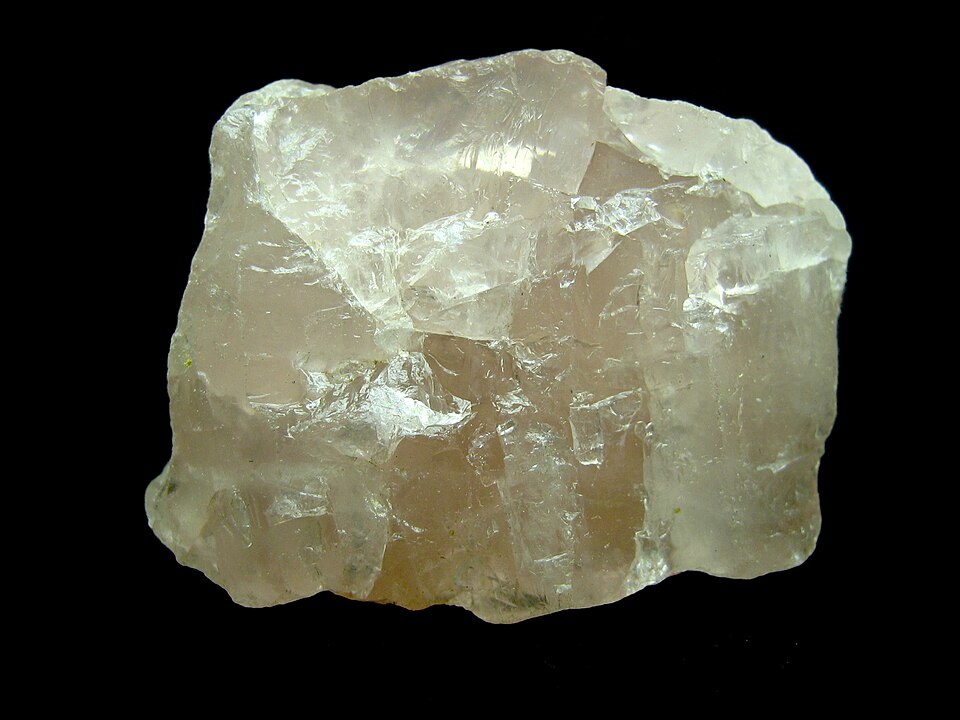
Before you can spot a fake, it helps to know what you are comparing it with. Genuine onyx is a variety of chalcedony [1], the same broad family that also includes agate and carnelian. Chalcedony [1] is cryptocrystalline [1]. Its crystals are far too small to see with ordinary magnification, so the stone looks smooth and even rather than grainy or glittery. Those tiny crystals are intergrowths of quartz and moganite [1], two closely related silica minerals.
Because it is a silica stone, onyx shares its chemical formula with quartz: SiO 2 [2]. Trigonal [2] is the crystal system given for it, which again reflects that quartz makeup. You do not need to memorize either detail to check a stone, but they explain two practical points. First, the stone wears like other quartz-family gems, so if you already know how a citrine or another quartz stone holds up in jewelry, this material will feel familiar. Second, anything sold as onyx that is not silica is not onyx in the gemological sense, whatever the label says.
The defining look is layered color. Classic onyx shows alternating bands, usually black and white, though brown, red-brown and gray layers also occur. When a cutter works across those layers, the result is the contrast you see in cameos and intaglios, where a pale layer is carved in relief over a dark one, or a design is cut down through the top layer into the one below.
Onyx compared with agate, onyx marble and imitations
Most mix-ups involve four kinds of material. Agate is a close relative, and some dealers use the two names loosely. The useful distinction is the pattern. Onyx bands are parallel, while agate banding is often more chaotic, curving and swirling through the stone [1]. A piece with wavy, concentric rings is better described as agate, even if it happens to be black and white.
Onyx marble, sometimes sold as Mexican onyx or simply under the shorter name, is a different stone altogether. It is a carbonate rock rather than a silica one. It is much softer than true onyx and more readily available [1], which is why it turns up in carvings, ornaments, boxes and inexpensive beads. It can be attractive, but it is not what a buyer expects when paying for the genuine stone.
Imitations made of glass or plastic form the third group, and dyed black stone forms the fourth. The table summarizes how they compare on the features this guide covers.
| Material | What it is | Banding | Surface and texture |
|---|---|---|---|
| Onyx | Banded chalcedony [1] | Parallel, straight layers | Fine and compact; takes a high polish and resists scratches |
| Agate | Banded chalcedony [1] | Often chaotic, curved or concentric | Fine and compact; similar polish |
| Onyx marble | Carbonate stone sold under the same name | Layered, often cloudy or wavy | Much softer, so it shows wear more readily |
| Glass or plastic | Manufactured imitation | Absent, or not like natural layering | Can look glossy when new |
| Dyed black stone | Genuine chalcedony [1] with added color | Usually hidden by the dye | Same hardness and polish as the natural stone |
Pay attention to the last row. Solid black stones sold as black onyx are frequently dyed. That is a real silica stone with a color treatment, a long-standing and accepted practice, but it should be disclosed, and it is not the same thing as naturally banded material.
Check the banding with a hand lens
Start with a close look at the layers. A hand lens or magnifying glass lets you inspect onyx and its features up close [2], and it does no harm to the stone.
- Hold the lens close to your eye and bring the stone toward it until the surface is sharp, rather than moving the lens toward the stone [2].
- Follow each band along its length. The bands should run parallel [1], keeping their direction rather than curling back on themselves or closing into rings.
- Ask whether what you see matches the distinctive pattern of parallel colored bands that marks this stone [2].
If the pattern curls into eyes, zigzag fortification shapes or concentric rings, the stone is more likely agate [1]. If what you see does not clearly fit either description, set the piece aside for an expert opinion instead of guessing. A lens shows you the pattern, but it does not tell you how that pattern was made, and that question is one a gemologist can resolve.
Tip: Photograph what you see through the lens with your phone held against it. Those images make it easier to compare pieces, to ask a seller precise questions, and to show a gemologist exactly what concerned you.
Plain black stones give you no bands to follow. On those, the lens mainly shows you texture and polish, which the next section covers.
Check texture, polish and surface wear
Genuine material has a fine, compact texture [2]. Under a lens, a polished surface should look smooth and uniform rather than granular, sugary or pitted. That fits its cryptocrystalline [1] structure, in which the crystals are too small to give the surface a visible grain.
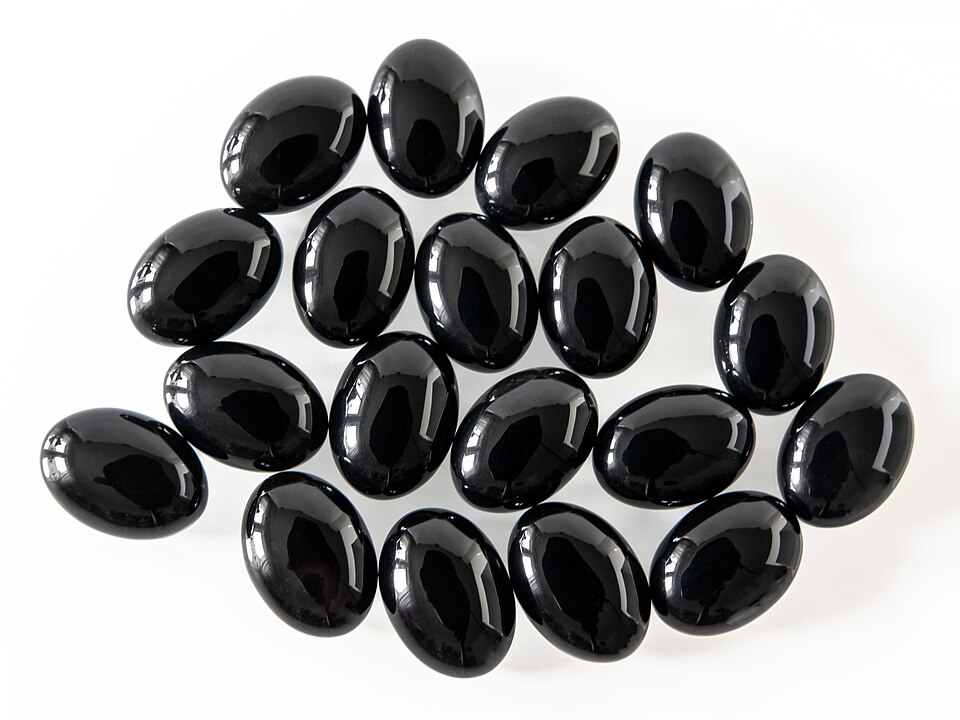
The second clue is polish. The stone resists scratches and can be polished to a high luster [2]. A well-finished piece shows a crisp, mirror-like reflection. A dull, waxy or hazy face on a stone sold as polished onyx deserves a closer look.
Wear is the third clue, and it is especially useful on older pieces. Because onyx marble is much softer than true onyx [1], it shows its age faster. Rounded corners, a dulled face and a dense web of scratches on a lightly used piece suggest a softer material, whereas the genuine stone resists scratches [2]. Any stone worn daily for years can pick up fine marks, so weigh the amount of wear against how much use the piece has seen.
These are observations, not proof. A new glass imitation can carry a bright polish, and a hard-worked genuine stone can be scratched. Weigh texture, polish and wear together with the banding check, never on their own.
Warning: Do not pay extra for a stone described as natural or untreated on the strength of how it looks. A glossy, even surface fits genuine, dyed and imitation material alike, so get the seller's full description in writing before you pay, and keep it with the piece.
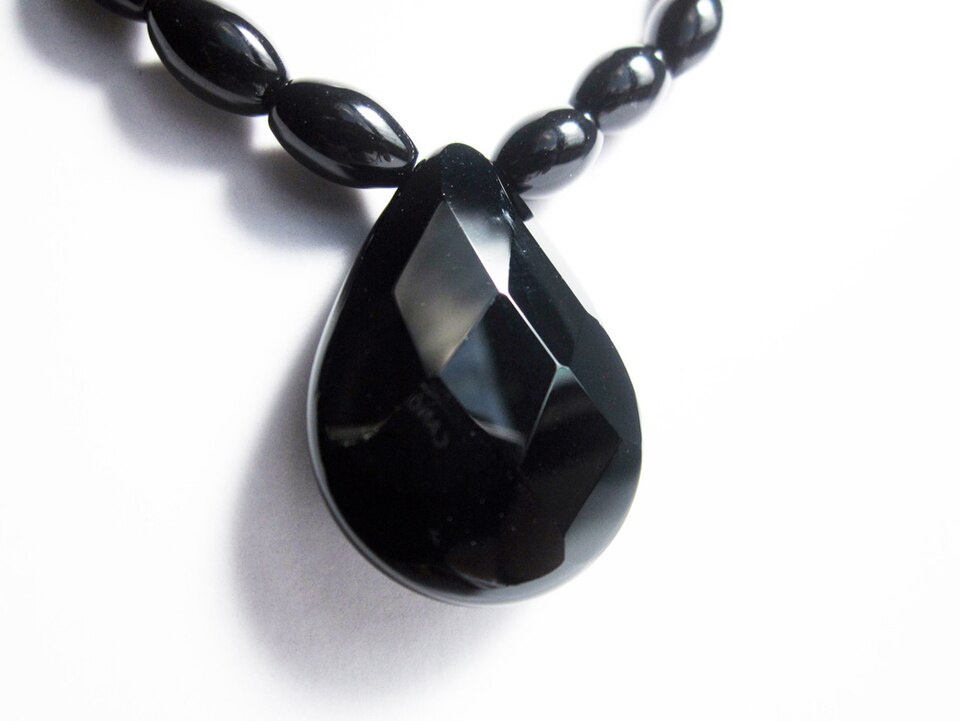
Black onyx, dyed stones and what home checks cannot show
Solid black stones are the form you will meet most in modern jewelry, and they are also the hardest to judge. Black onyx sold for rings, beads and inlay is very often chalcedony [1] dyed to an even black. The treatment is long established and accepted in the trade, and the stone underneath is genuine. The issue is disclosure, not fraud, as long as the seller tells you.
On a black stone, what you can check at home is limited to texture and polish. A fine, compact surface [2] that takes a high, scratch-resistant polish [2] is consistent with both dyed and naturally black material, but it does not tell you which one you have, and it does not rule out a well-made glass imitation. None of the checks in this guide can confirm whether color was added.
That is where a qualified gemologist or gem lab comes in. A written identification from a professional turns a seller's claim into something you can rely on and show to others later. Paying for that opinion makes sense when:
- the piece is described as natural or untreated and priced on that basis
- you are buying an antique where originality matters to its value
- the stone is large, carved or signed, and the seller's claim affects what it is worth
- you are insuring or selling and need a written statement of what the stone is
For a simple pair of black studs or a beaded bracelet, a professional opinion often costs more than the difference it would make. The practical questions there are whether you like the piece and whether the seller described it honestly.
Checking stones in rings, cameos and beads
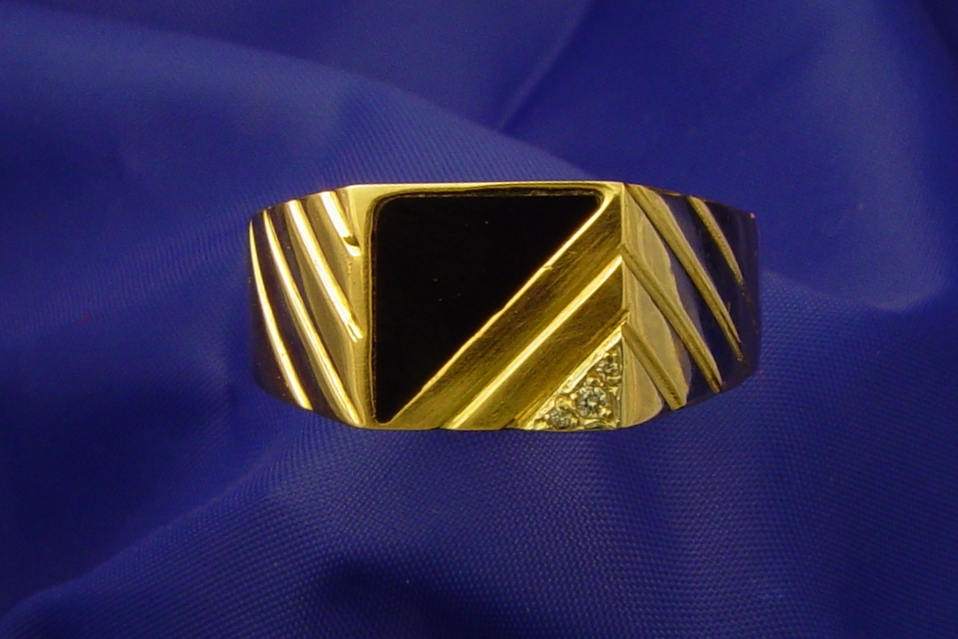
The setting changes what you can see. In a signet ring or a bezel-set cabochon, the metal covers part of the stone, so you may see less of the layering than you would on a loose stone. Do not try to lift prongs or push back a bezel for a better view; that job belongs to a jeweler, and forcing the metal can leave the stone loose in its mount.
Carved cameos and intaglios suit the banding check, because the carver works down through the layers. In a stone cameo, the pale figure and the dark ground should be distinct layers of one piece, following the parallel banding [1] typical of the stone. Many cameos are carved from shell rather than stone. Shell is a different material entirely and should be described as such.
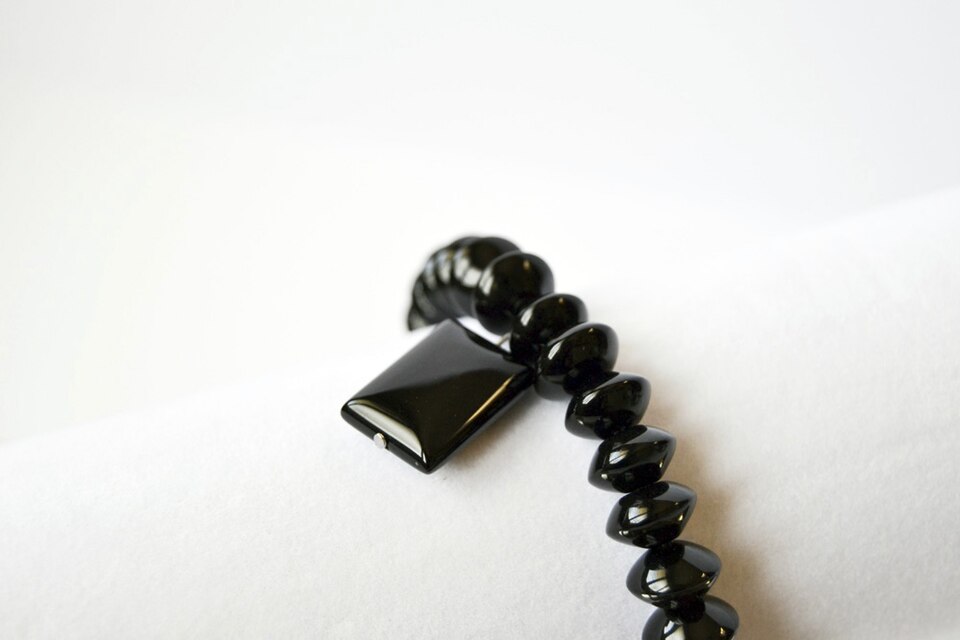
Beads are often the easiest form to examine, because nothing covers them. Look at them under a hand lens [2] for the parallel color bands [2] you would expect, rather than swirls or rings, and remember that a strand of plain black beads leaves you with texture and polish as your only clues.
Keep the metal and the stone as separate questions. A stamp inside a ring band tells you about the gold, silver or platinum, not about the stone it holds, and a real stone can sit in a plated mount. If the piece combines the black stone with others, such as small white accent stones in a cocktail ring or red stones in an older mourning design, check each one on its own terms. Our guides on how to tell if a diamond is real and how to tell if a garnet is real cover two frequent companions.
Common mistakes when judging onyx
Money lost on this stone usually comes from a few avoidable errors.
- Calling every black-and-white striped stone onyx. Curving, swirling or ring-shaped bands are typical of agate, while true layers run parallel [1].
- Treating Mexican onyx or onyx marble as the same thing. That material is much softer than true onyx and more readily available [1], so it should not be bought on the same terms.
- Assuming a jet-black stone has natural color. Dyeing is common and accepted, but if a listing claims untreated color, ask for that claim in writing.
- Relying on a single sign. A high polish and resistance to scratches fit the real stone [2], but a new glass imitation can look glossy too.
- Reading the metal stamp as a verdict on the stone. A hallmark describes the metal and nothing more.
- Assuming every cameo is carved from stone. Many are shell, which is a separate material with a different value, so confirm what the carving is cut from before you agree a price.
- Buying an expensive antique cameo or signet ring on description alone. When the attribution affects what you pay, make the sale conditional on an independent examination and agree a return window before you hand over payment.
A final point on language: listings that say onyx-style, onyx-look or onyx color describe an appearance, not a material. Read them as a signal that the piece is probably an imitation, and ask what it is actually made of.
When to ask an expert, and a quick first read
Home checks can tell you whether a stone looks and wears the way genuine material should. They cannot settle whether a black stone was dyed, whether a convincing piece is glass, or what a carved antique is worth. Ask a qualified gemologist or an independent appraiser whenever the answer affects a purchase, a sale, an insurance policy or an estate division, and request a written report that names the material and any treatment.
Before the appointment, gather what you have: photos of the piece, notes on what you saw under the lens, and any paperwork or listing text from the seller. A professional can work faster with it, and you can compare their findings with what you were told.
If you want a quick first read before deciding whether a piece is worth taking in, Jewelry Identifier can recognize a stone from a photo, suggest its likely type, and give an AI value estimate for research. That estimate is not a certified or insurance appraisal, and a photo cannot prove a stone is natural or untreated, so treat the result as a starting point and let a gemologist confirm anything that matters. You can also save identified pieces to a personal catalog with notes, tags and photos, which helps when keeping track of a collection or preparing for estate planning.
Common questions
- Is black onyx usually dyed?
- Very often, yes. Many solid black stones sold under this name are genuine silica stones dyed to an even black, which is an accepted practice as long as the seller discloses it. If natural color matters to the price, ask for that claim in writing and have a gemologist look at the piece.
- Can I tell onyx from agate just by looking?
- Often you can, because the pattern is the main difference. True layers run straight and parallel, while agate bands tend to curve, swirl or form rings. Some pieces fall in between and dealers use the names loosely, so judge the pattern rather than the label.
- Is onyx marble the same stone?
- No. It is a different and much softer carbonate stone that is sometimes sold under the shorter name, especially as carvings and decorative objects. It is natural, but it scratches and dulls more readily and should be named for what it is.
- Does a bright polish prove the stone is genuine?
- No. The real material takes a high polish, but so can glass, some plastics and dyed stone. Polish is one clue to weigh alongside the banding, the texture and the amount of wear the piece shows.
- Will a jeweler know whether my stone is real?
- A jeweler with gemological training, or a gem lab, can give you a professional written identification of the stone. A general retail jeweler may not offer this service, so ask in advance whether they provide written stone identification and what the report will state.